

Falling to 1-3 would not have sunk the Dallas Cowboys' season, but they would've had to work awfully hard to dig themselves out of that hole. And it would have required an even greater effort to fully turn their season around and make the playoffs.
By improving to 2-2 in Sunday's win over the Texans, Dallas is firmly in contention in the NFC East. The offense hung 34 points on a vaunted defense, including 28 in the second half, and the defense, while often a pushover, only allowed Houston to convert three of 10 third downs.
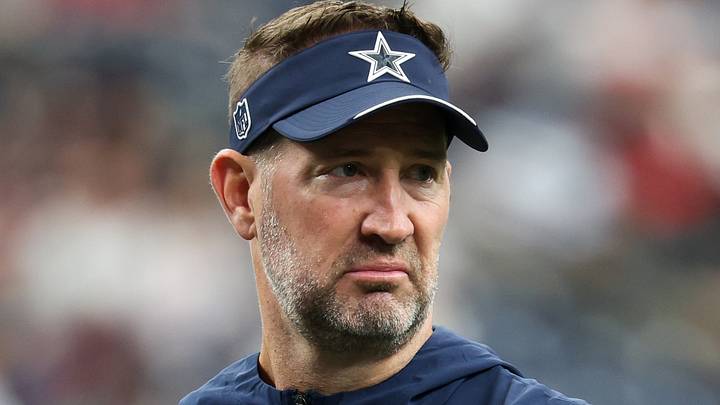
Is the Cowboys' current formula for winning sustainable? It could be, but not if Brian Schottenheimer continues to make careless mistakes.
Schottenheimer's poor game management showed up again at the end of the first half when he tried a 65-yard field goal with 30 seconds left in the second quarter with Dallas trailing 13-6.
Brian Schottenheimer should have punted the ball
Brandon Aubrey pushed the kick right, giving the Texans a short field, and sure enough, they kicked their own field goal as time expired to take a 16-6 lead into halftime. It was a six-point swing and would have loomed large if not for Dak Prescott and CeeDee Lamb exploding in the second half.
A six-point swing. That cannot happen.
Aubrey is paid to make abnormally long kicks, but the time to try a 65-yarder is when there are three seconds left, when you know, without a shadow of a doubt, that it's the last play of the half. Houston ran four plays before trotting out Kai'mi Fairbairn.
Here is Schottenheimer's explanation for the decision (h/t Jon Machota, The Athletic):
“We have our yard lines that we’re aiming to get to, and we were over it by a yard or two. We felt very comfortable that (Brandon Aubrey) would make that kick. And at that point in the game, I had no question that if for some reason he missed it that we had plenty of time to fight back. But you’re always going to trust your players in those situations.”
No. No. No. NO.
It shouldn't have had anything to do with trusting Aubrey. Even knowing that Aubrey has the biggest leg in football, the obvious play in that situation was to punt the ball. Force the Texans to drive the length of the field in 30 seconds. The context of the game should have weighed more heavily than Aubrey's ability.
It's possible the Texans would have sat on the ball and taken the game to halftime rather than risk a mistake deep in their own territory.
Schottenheimer should not have trusted the kicking operation after Houston's blocked FG
And regarding Schottenheimer's confidence in Aubrey, what about the rest of the kicking operation?
A blown assignment led to a blocked field goal against the Ravens in Week 3, and on Dallas' previous possession Sunday, Will Anderson Jr. overwhelmed the protection to block Aubrey's 62-yard attempt.
At that point, trusting Aubrey's leg wasn't enough. Schottenheimer also had to trust a protection unit that had already failed him twice in as many weeks.
More importantly, though, the context of the game — and the clock — should have taken precedence. Sure, six points were left on the field by the two missed field goals, but the Texans' defense had made life difficult for Dak Prescott to that point.
Credit to Schottenheimer, his staff, and Prescott for adjusting in the second half, but it was incredibly reckless of the Cowboys' head coach to risk falling behind by two scores with his offense struggling to move the ball.
There's a time and place to be aggressive. This was a situation that called for discretion and ensuring your team entered halftime down by only one score. The risk was apparent in real time. It didn't take hindsight.
This is many Cowboys fans' biggest gripe with Schottenheimer. 90 percent of the time, he's a great play-caller. He deserves credit for how prolific and adaptive the offense is. But Dallas doesn't stand a chance at competing in January if he can't figure out how to navigate end-of-half situations and manage the clock better.
Calling plays and being a CEO is not easy. But conversations about Schottenheimer giving up play-calling so he can better manage the broader responsibilities of the job are going to get louder with each blunder.
 Add us as a preferred source on Google